In our podcast, Steve provides some personal impressions of Sheila Jordan as a person and observations on what made Sheila one of the greatest vocal talents in jazz, and he presents some samples of her work.
Our playlist is a companion to the podcast. It includes complete versions of all the material excerpted in the podcast (with the exception of “Confirmation,” which was released in Japan and is not available to streaming services), along with more tracks for your enjoyment and exploration.
You can access our Jazz Ave playlist of Sheila Jordan performances on Spotify by clicking on this link. You can also scroll through the playlist and hear any individual track by clicking on it:
Other streaming services – Apple Music, Amazon Music, Deezer, Qobuz, Tidal, etc. – have many of Sheila’s recordings, but some of them call for you to subscribe or provide your email. Feel free to listen to our choices on one of those services if you choose to.
Many of Sheila’s releases are available to hear without subscription on YouTube Music. This is her YouTube Music page: https://music.youtube.com/channel/UCx8yzAdmezevBY9TvGnjvoQ
Notes by Steve Elman.
1. Look for the Silver Lining (Jerome Kern / Buddy DeSylva) – Jordan, vo; Stephan Kramer, 7-string g (from Stephan Kramer: Thank You Sheila!, House Master [Germany], released 2018) Rec. Munich, Germany, c. 1977 [date provided by Apple Music].
This duet comes from a group date led by Stephan Kramer, a German guitarist who had many experiences learning from and working with Sheila. He is a very sensitive accompanist and sets up this tune for a great reading.
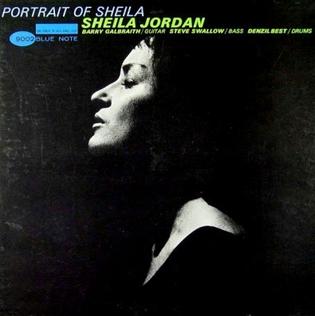
2. Baltimore Oriole (Hoagy Carmichael / Paul Francis Webster) – Jordan, vo; Steve Swallow, b; Denzil Best, dm (from Portrait of Sheila, Blue Note, 1963) Rec. Englewood Cliffs, NJ, 1962
Swallow is playing acoustic bass here, showing great sensitivity to the accompaniment as well as to the beat. Later in his career he gave up the acoustic instrument to concentrate exclusively on electric bass, where he is considered one of the world’s great stylists. The tune became a signature for Jordan, who performed it regularly throughout her life.
3. You Are My Sunshine (Jimmie Davis) – Jordan, vo; George Russell, p, arr; Don Ellis, tp; Garnett Brown, tb; Paul Plummer, ts; Steve Swallow, b; Pete LaRoca, dm (from George Russell: The Outer View, Riverside, 1962) Rec. New York City, 1962
Composer George Russell radically rearranges Jimmie Davis’s southern classic here, bringing out its darkness in a way never before imagined. He begins with six statements of the theme by the instrumental group in various tempos and with different instrumental voices coming briefly to the front. All of these choruses show off Russell’s unique ideas of harmony, where (especially in the bass and piano parts), he provides a foundation that opens up the simple emotions of Davis’s tune and permits a far wider range of expression by the trumpet, trombone and tenor sax. Then, with a piano flourish, he leads into Jordan’s vocal. He calls for her to sing the first eight lines with no accompaniment – a stunning passage that shows off the amazing beauty and maturity of her voice. Then the ensemble sneaks back in to accompany her, and finally it takes over for a brief boozy conclusion. This track remains a milestone in the discographies of both of these two geniuses.
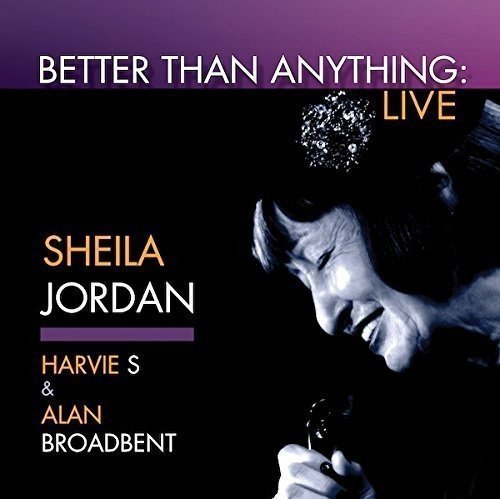
4. Confirmation (Charlie Parker / Skeeter Spight / Leroy Mitchell) – Jordan, vo, Harvie S, b; Alan Broadbent, p (from Better Than Anything – Live, 2016; also available on bandcamp.com) Rec. Kimball’s East, Oakland, CA, 1991
Thanks to Raul da Gama for the recording data. See his review / appreciation of the full recording at https://jazzdagama.com/music/sheila-jordan-better-anything-live/
This version of “Confirmation” stands in for the one we excerpted on the podcast, which was taken from Jordan’s 1975 Japanese LP Confirmation, made for East Wind and released the same year it was recorded. Regrettably, Spotify does not have access to that recording.
After Harvie’s solo intro, Jordan sets a faster pace for herself than she did on the 1975 recording, and that makes it harder for to her sing all the words written by Spight and Mitchell with perfect clarity, but she sparkles in her scat choruses, so it’s great nonetheless.
5. Tomorrow’s Son (Steve Kuhn) – Jordan, vo; Steve Kuhn, p; Harvie S [as Harvie Swartz], b; Ra Kalam Bob Moses [as Bob Moses], dm (from Steve Kuhn / Sheila Jordan Band: Playground, ECM, 1979; reissued in Steve Kuhn: Life’s Backward Glances, ECM, 2006) Rec. New York City, 1979
For the recordings of the Kuhn – Jordan quartet, ECM producer and major domo Manfred Eicher made the controversial decision to mix Jordan as an equal partner with Kuhn, rather than to give her the traditional up-front mix that is given to most singers. As a result, you may have to boost the volume in your playback to hear all the words here, but it’s worth it for her spellbinding performance. Kuhn builds beautiful intensity in his accompaniment, making this much more than just a “tune,” but a real composition, and Jordan brings heartfelt meaning to Kuhn’s enigmatic lyric.
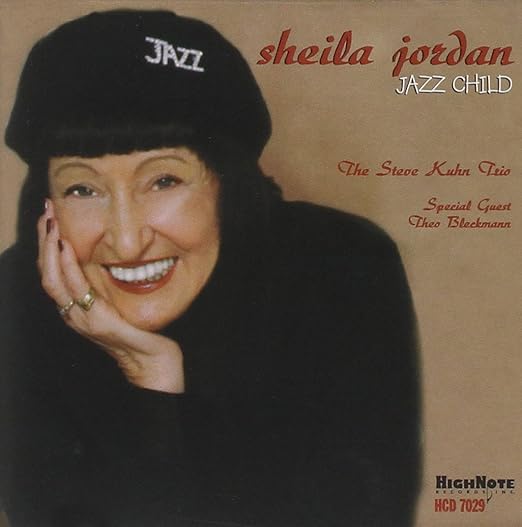
6. Art Deco aka Art of Don (Don Cherry / Sheila Jordan) – Jordan, vo; Steve Kuhn, p; David Finck, b; Billy Drummond, dm (from Jazz Child, HighNote, 1999) Rec. New York City, 1998
This example of Sheila’s lyric writing is simultaneously a tribute to trumpeter Don Cherry, who wrote the original tune, and an expression of her own optimistic love of the musical experience.
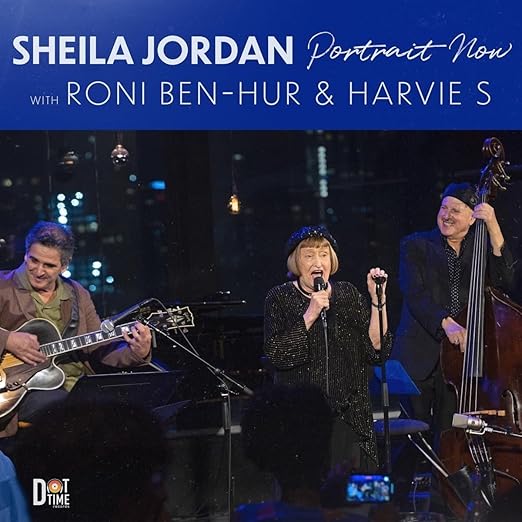
7. Relaxin’ at Camarillo [erroneously shown as “Relaxing at the Camarillo” by the label, by Spotify, and by Apple Music] (Charlie Parker / Sheila Jordan) – Jordan, vo; Harvie S, b; Roni Ben-Hur, g (from Portrait Now, Dot Time, 2025) Rec. c. 2022, Bronx, NY
In this one, Sheila presents lyrics she wrote on a Charlie Parker line. Unlike so many others (but absolutely consistent with herself), Jordan uses the lyric to tell of her admiration for Parker and how she reacted when she first heard him play. Israeli-American guitarist Ben-Hur has a nice spot, too.
8. The Zoo (Steve Kuhn) – Jordan, vo; Steve Kuhn, p; David Finck, b; Billy Drummond, dm (from Jazz Child, HighNote, 1999) Rec. New York City, 1998
Here’s another Kuhn song with a lyric that slides between the definite and the enigmatic. Is it about zoo animals, or the singer’s loneliness? Jordan finds the path within it to make it meaningful. It seems to be just a nonsense ditty, but she brings sadness to the final lines.
Here are a few more great examples of Sheila Jordan’s artistry, so that you can deepen your appreciation of her work.
9. The Crossing (Jordan) – Jordan, vo; Steve Amirault, p; Kieran Overs, b; Andre White, dm (from Winter Sunshine, Justin Time, 2008) Rec. Upstairs Jazz Bar & Grillades, Montreal, Quebec, 2008
10. Sheila’s Blues (Jordan) – Jordan, vo; Steve Amirault, p; Kieran Overs, b; Andre White, dm (from Winter Sunshine, Justin Time, 2008) Rec. Upstairs Jazz Bar & Grillades, Montreal, Quebec, 2008
In the podcast, I referred to the way Jordan often works her biography into her songs, and we played “Relaxin’ at Camarillo” as an example of her lyric telling her of her first hearings of Charlie Parker. Here are two more, the conclusion of a live set she did in Montreal. The first is a sensitive lyric full of advice on the trials of life, informed by her long experience. The second is a full-blown example of Sheila singing directly to the audience and then improvising her life story, over a standard blues backing. Between the two, she does a typically generous introduction of her all-Canadian jazz trio, probably a pickup group for this performance, who handle all the curves she throws at them with aplomb.
11. Please Don’t Talk About Me When I’m Gone (Beatrice Palmer / Sam Sept / Sidney Claire) – Jordan, vo; Arild Andersen, b (from Sheila, SteepleChase, 1977) Rec. Oslo, Norway, 1977
Sheila takes a very free approach to the melody on this old standard and it’s a showcase for her innate and natural inventiveness – nothing about the substituted notes sounds forced or artificial, and there’s even an edge of bitterness that counterbalances the speedy tempo. Norwegian bassist Andersen has a solo, a gem, in between the two vocal choruses. The final chorus is just as strong as the first one, and the two players land together, like two dancers, in perfect step.
12. Fairweather (Kenny Dorham) – Jordan, vo; Tom Harrell, tp; Steve Kuhn, p; David Finck, b; Billy Drummond, dm (from Little Song, HighNote, 2003) Rec. New York City, 2002
Here’s another of the great collaborations with Steve Kuhn, who limits his role to piano comments on Jordan’s vocal. This is an extraordinarily sensitive ballad performance by Sheila, with Kuhn’s working trio as the backing band. Her vocal is completely imbued with her love for her friend, the late Kenny Dorham, a trumpeter-composer still underappreciated today by the general public, but revered by fellow musicians for his depth and intelligence. Dorham also wrote and sang vocal tunes like this one. A special feature here is the solo by Tom Harrell, an introspective trumpeter perfect for interpreting Dorham. There are lovely vocal moments throughout, including a beautiful and daring melisma on the last word, “friend,”
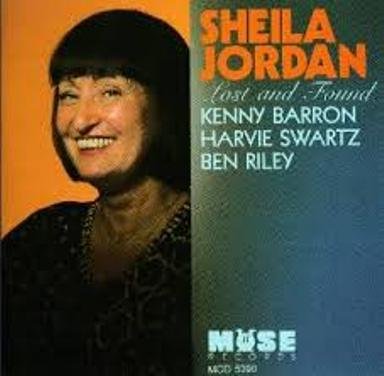
13. I Concentrate on You (Cole Porter) – Jordan, vo; Kenny Barron, p; Harvie S [as Harvie Swartz], b; Ben Riley, dm (from Lost and Found, Muse, 1990) Rec. New York City, 1989.
The trio assembled for this date is stellar – pianist Kenny Barron, still with us as of this writing, is an NEA jazz master; bassist Harvie S collaborated extensively with Sheila and can do anything on his instrument; and drummer Ben Riley is one of the steadiest hands in percussion, known principally for a long run with Thelonious Monk. They give Sheila a bright bossa nova backing on this standard, and she plays with the melody superbly. Barron has a typically superb solo, too.
14. What Are You Doing the Rest of Your Life? (Michel Legrand) – Jordan, vo; Roswell Rudd, tb; Hod O’Brien, p; Arild Andersen, b; Barry Altschul, dm (from Roswell Rudd: Flexible Flyer, Arista / Freedom, 1975) Rec. New York City, 1974
This one is unique in Sheila’s discography, a collaboration with Roswell Rudd, a trombonist often misunderstood as an avant-garder, when he actually was a profound individualist, who went his own way no matter what, and fearlessly challenged himself to do the unexpected. Most of this track is a duet for voice and trombone, with Sheila deep into the heart of the lyric and Rudd providing single notes below her that somehow convey all the harmony that’s needed. The two breaks with the rhythm section show Jordan jumping from extreme intimacy to her most operatically intense. This song, which I have always regarded as rather slight, here becomes an aria with epic impact.
15. Hold Out Your Hand (Steve Kuhn) – Jordan, vo; Arild Andersen, b (from Sheila, SteepleChase, 1977) Rec. Oslo, Norway, 1977
Kuhn’s arch lyric is about alcohol abuse, and Jordan invests it with her experience with booze and cocaine. In a 20 Questions interview with her (see Dig Deeper), Sheila talks about the sadness of growing up in an alcoholic family, where “everybody drank.”
As is typical with Kuhn’s songs, this is not one-dimensional. It may feel like a whimsical ditty – until you hear the words. One way to read it is as a plea for understanding through a drunken haze. After Andersen’s bass intro, Jordan scats her first chorus, sticking close to the melody, and then jumps right into the lyric:
Falling all over the floor
I can’t seem to find my way
Every time I lift my glass
People laugh at me
Won’t you tell me how to behave?Here’s my hand, look in my eyes
That’s all I ask of you, I really want of you.I’m alive
Everyone seems so lost
In the past
It’s you I loveAs my head is clear most of the time
All I ask of you, I really want of you.
Jordan colors “Here’s my hand, look in my eyes” with a hint of pathos – this is the voice of someone who knows what it’s like to be pitiably drunk, trying to hold on to a shred of dignity. Kuhn concludes the line with a wordless seven-note figure, repeated four times. Jordan and Andersen use that as an outro.
16. Two Bass Hit (Dizzy Gillespie / John Lewis) – The Echo Park Project (from Big Band Tribute Dizzy Gillespie [single], Echo Park Project, 2017) Rec. Los Angeles, c. 2017